Watercolor Jungle Repeating Border: A Designer's Review
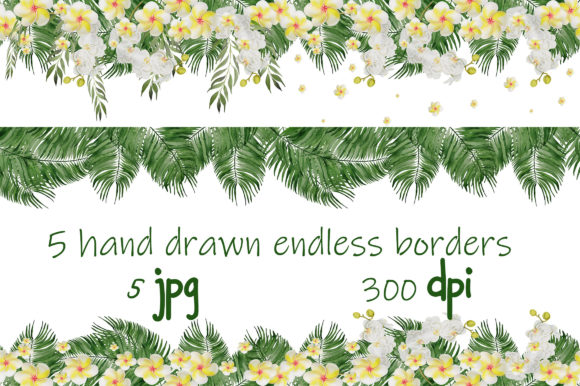
When I first pulled up the Watercolor Jungle Repeating Border on my screen, I wasn't just looking at another digital file; I was immediately visualizing the texture of linen and the sheen of rayon thread. As someone who spends hours hooping fabric and tweaking tension settings, my first impression is always about potential. This design falls squarely into the Illustrations category, but its true test lies in how it translates from a flat graphic to a tactile, stitched reality. The mood here is lush and organic, offering a softness that rigid vector lines often miss. It feels like a breath of fresh air for projects that need to feel handmade rather than mass-produced.
Visual Personality and First Impressions
The layout of this border is where it shines brightest for a professional eye. Unlike standard geometric borders that can feel repetitive and robotic, this jungle theme introduces a natural flow. The "watercolor" aspect suggests a blend of colors and softer edges, which challenges us as embroiderers to replicate that gradient effect using thread colors and stitch types. Does it rely heavily on satin stitch for those smooth leaf edges, or does it utilize fill stitch to create depth? In a real-world scenario, these details dictate how the light hits the finished product. The visual personality is whimsical yet grounded, making it an excellent candidate for brands that want to project creativity without sacrificing professionalism.
Real-World Application: The Boutique Tote Scenario
To truly evaluate this machine embroidery design, let's walk through a specific project I recently considered for a local boutique client. They needed a signature look for a new line of canvas tote bags intended for farmers' market shoppers. The goal was a handmade product that felt elevated but durable. I imagined the Watercolor Jungle Repeating Border running along the bottom hem of a natural cotton tote.
In this context, the repeating nature of the design is a massive asset. It allows for scalability; whether the bag is a small lunch sack or a large grocery carrier, the border can extend to fit the width perfectly without looking cropped or awkward. For an Etsy seller or small shop owner, this versatility means one digital embroidery file can serve multiple product SKUs. The jungle theme resonates well with current trends in eco-friendly and botanical aesthetics, likely boosting buyer engagement on social media platforms where visual appeal drives sales.
Performance on Different Fabrics and Garments
However, enthusiasm must be tempered with technical realism. How does this design perform when the needle actually hits the fabric? For custom apparel like sweatshirts or hoodies, the texture of the fleece can sometimes swallow fine details. If the Watercolor Jungle Repeating Border relies on tiny running stitch details to mimic watercolor bleeds, these might get lost on a thick, looped fabric. Conversely, on a crisp poplin shirt or a smooth tea towel, those same details would pop beautifully, creating a high-end finished product.
I also see strong potential for baby embroidery. The soft, non-aggressive lines of a watercolor style are perfect for nursery decor, such as pillow covers or blanket hems. Parents often seek out gentle, nature-inspired themes for their little ones, and this design fits that brief perfectly. Yet, one must consider the stitch density. If the design is too dense, it can make a baby garment stiff and uncomfortable against sensitive skin. A lighter touch with more underlay management would be ideal here.
Technical Considerations and Potential Pitfalls
Before committing to a production run, there are several areas where caution is required. If you are planning to use this on curved surfaces, such as a cap or hat, the repeating pattern might distort near the seams unless the digitizing accounts for the curve. Similarly, placing this border on stretchy fabrics like jersey knit requires a robust stabilizer strategy. Without proper support, the "watercolor" blends could pucker, ruining the illusion of softness and turning it into a messy cluster of threads.
Dark fabrics present another challenge. Watercolor effects often rely on layering lighter tones over white backgrounds. On a black or navy garment, the design might need a solid underbase or specific thread choices to ensure the colors remain vibrant and true to the original illustration. Always test your thread color contrast on scrap fabric that matches your final material. What looks stunning on a white mockup might vanish into the shadows on a dark green hoodie.
Enhancing Brand Value and Customer Trust
From a business perspective, the quality of your embroidery project directly impacts customer trust. A clean, well-executed border signals attention to detail. If you are selling personalized gifts or holiday embroidery items, the perceived value increases when the stitching looks intentional and polished. The Watercolor Jungle Repeating Border, when executed correctly, adds a layer of sophistication that generic clip-art styles cannot match. It helps in building brand consistency, especially if you use this motif across various touchpoints like packaging tags, aprons for staff, or even as a watermark in your printable mockups.
Final Verdict and Designer Notes
As a reviewer, I believe this design holds significant promise for creative entrepreneurs, but it demands respect for the medium. It is not a "load and go" file for every situation. Here are my practical notes for anyone looking to integrate this into their workflow:
- Test First: Always stitch out a sample on your actual production fabric. Check how the fill stitch interacts with the weave.
- Check Density: Inspect the back of the sample. If there is excessive thread buildup, you may need to adjust your machine tension or switch to a thinner thread weight.
- Hoop Size: Confirm that your hoop size accommodates the repeat length you need. You may need to re-hoop for longer borders on large items like curtains or table runners.
- Licensing: Before selling finished items or using this as a design asset for clients, verify the license terms. Ensure commercial use is permitted for physical goods.
- Contrast Check: View your test stitch-out in black and white (or take a photo and desaturate it). This reveals if the design has enough tonal variation to stand out without relying solely on color.
In conclusion, the Watercolor Jungle Repeating Border is a versatile and aesthetically pleasing option for those willing to put in the prep work. It bridges the gap between digital artistry and tactile craft, offering a unique look for commercial embroidery projects. Whether you are creating a custom patch, decorating a kitchen towel, or launching a new line of boutique apparel, this design can elevate your work—provided you approach it with the eye of a designer and the hands of a skilled maker.